Ellen Wessel and Elizabeth Goeke
When Ellen Wessel and Elizabeth Goeke started running in the 1970s, they quickly realized the apparel available wasn’t well suited to women’s needs. Shorts bunched between the legs, didn’t fit right around the waist, and chafed in unmentionable areas—and definitely didn’t have pockets. Sports bras, let alone those that supported larger breasts, weren’t yet available.
“It was either men’s or unisex, but there was nothing out there that properly fit a female,” Wessel says.
She and another business partner first began designing women’s running shorts for the Washington RunHers, a women’s running club in the DC area that she, Henley Gabeau, and others started in the mid-70s. They contracted with four local home seamstresses to produce them, and before long, began selling them in local running stores, too. They called the fledgling company Moving Comfort, “a very simple description of what we were trying to accomplish,” Wessel says.
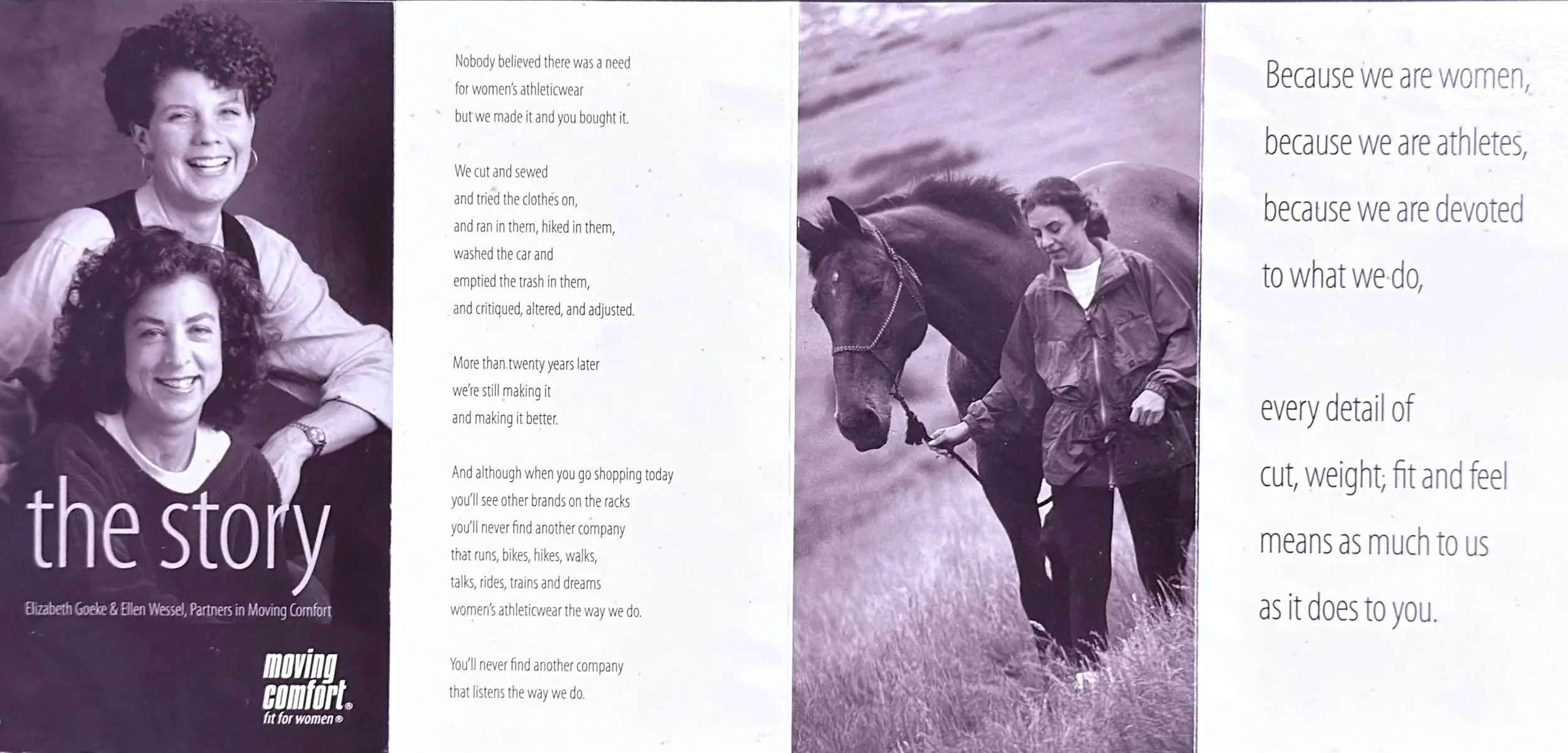
Wessel had a feeling the brand had potential. She was now hooked on running—eventually logging 70-mile weeks and finishing nine marathons—and more women were entering the sport. But she wasn’t quite sure how to scale, and when her original business partner dropped out, she scrambled.
Around the same time, Goeke was working as a tailor and had picked up a running habit to quit smoking. Her then-boyfriend—who was actually Wessel’s ex, and remained a friend of her brother’s—bought her a pair of Moving Comfort shorts for her birthday. Goeke loved the concept, but thought the fit left a lot to be desired.
She wound up returning them, but that was far from the end of the story. Their mutual connections realized that Wessel could benefit from Goeke’s expertise and brokered a run for the two of them to meet. Soon, Goeke was testing many of Moving Comfort’s new designs. “I said, they are better, but they could be better yet,” Goeke says. Before long, she joined the company.
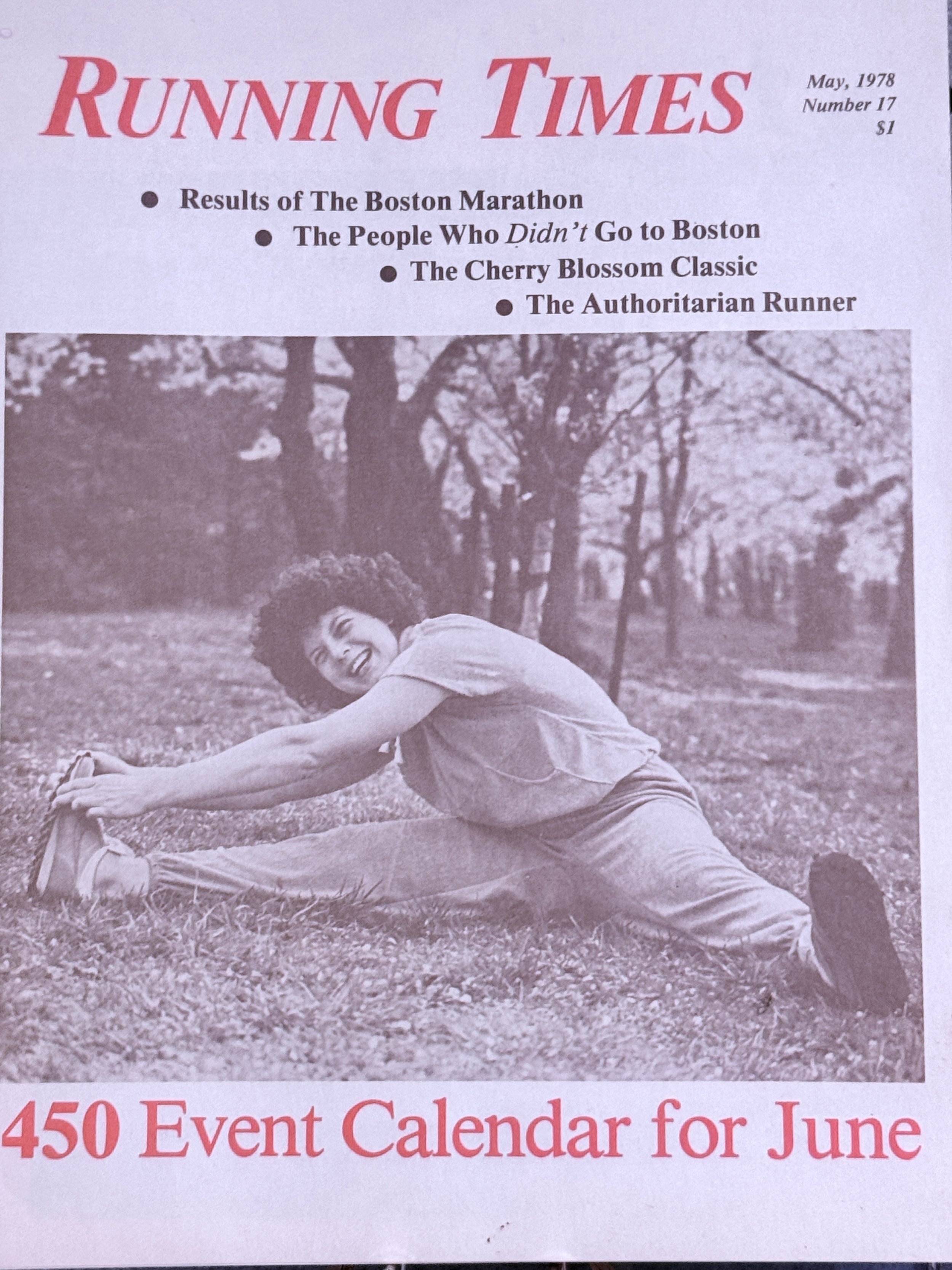
From there, the business grew, carefully but steadily. Author Jim Fixx added Moving Comfort to the index of his famous guide, The Complete Book of Running, as a source of women’s clothing. “That was the first catapult for going from making custom clothing for women in our running club to responding to retailers,” Wessel says.
To keep up with demand from stores across the country—including Fleet Feet, Phidippides in South Carolina, Super Jock ’N Jill in Seattle, and eventually, large retailers like Bloomingdale’s and Nordstrom—Goeke found a manufacturing facility in South Carolina, which also started small (a couple with four sewing machines) and grew as Moving Comfort did. That manufacturer also soon began producing sports bras for JogBra, the company making the first-ever sports bra; as a result, the two considered themselves sister companies.
Launching a woman-owned and focused business in a field dominated by men wasn’t always easy, Goeke and Wessel say, especially because they were only in their 20s when they started. At first, banks hesitated to extend them credit. While some store purchasers recognized the value of women’s products, others expressed shock that anyone would want colors other than black, or mocked the designs as looking like seat covers.
Over time, though, the category continued to expand. By the mid-90s, other major running brands began to realize the value of the women’s market. But Moving Comfort had a head start, as well as an authenticity reinforced by steps such as product tags with the pair’s picture on them. “That was a differentiator for us, that we really were seriously a woman-owned business, and the design was made by women for women,” Goeke says. “That was part of our value.”
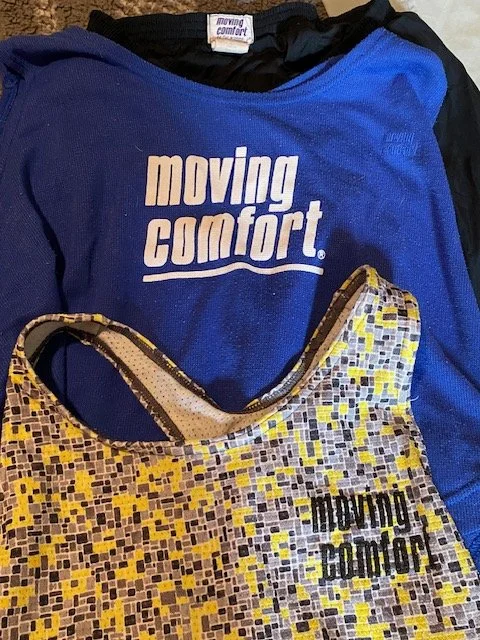
They also, around that time, found another way to set themselves apart. While they’d held out from making sports bras in deference to JogBra, the latter sold to Playtex in 1990, and “all bets were off.” Both customers and retailers had been clamoring for Moving Comfort sports bras, and they jumped into the market with an approach that included engineering supportive systems for women with larger breasts. “There were plenty of women who couldn’t run because they were too uncomfortable,” Wessel says. “That became very much a part of our mission, to make it comfortable and attractive to run around with just a bra on if you’re a D Cup.”
Moving Comfort bolstered the bra business with unique marketing ideas. Their sales reps started a “bra brigade,” toting squishy balls in different weights and sizes to educate male sales clerks about what it was like to run with extra mass at chest level. They also encouraged stores to have fitting rooms and mirrors, and worked with them to host bra-fitting clinics. Eventually, bras accounted for about three-quarters of the company’s business.
At Moving Comfort’s peak, they had about 20 employees, along with contracted manufacturers and sales reps. However, by the early 2000s, Goeke and Wessel realized they needed to join a larger organization to keep the brand alive. Manufacturing had become substantially more complex and international, and they also needed more marketing power. They sold the company to Russell and worked there for four years, in roles that were a challenging fit for their entrepreneurial mindset. Their last day at the company was June 30, 2006.
Moving Comfort eventually became part of the Brooks brand. In 2017, the name was phased out, with products re-branded as Brooks for Women. That day wasn’t an easy one, especially because it came about the same month as the company’s 40th birthday celebration.
Yet looking back, though, Goeke and Wessel—who remain good friends—recognize the impact they had. “Our mission was, ‘A fit woman is a powerful woman.’ We were very committed to encouraging women to make fitness a central part of their lives,’” Wessel says. By the time they left the company, they saw that much of what they’d aimed to accomplish had come to pass, with women facing far fewer barriers to pursuing running or other sports or activities.
They’re also proud of the products they made, which had both integrity and quality. “The best review is when women come up and they go, ‘I’m still wearing these bras,’” Goeke says. “It happens!”
Note about the author: Cindy Kuzma is a freelance journalist, author, and podcaster based in Chicago, and part of the leadership team for Starting Line 1928. She is co-author of Breakthrough Women’s Running: Dream Big and Train Smart and Rebound: Train Your Mind to Bounce Back Stronger from Sports Injuries; and co-host of The Injured Athletes Club podcast.