Gordon Bakoulis
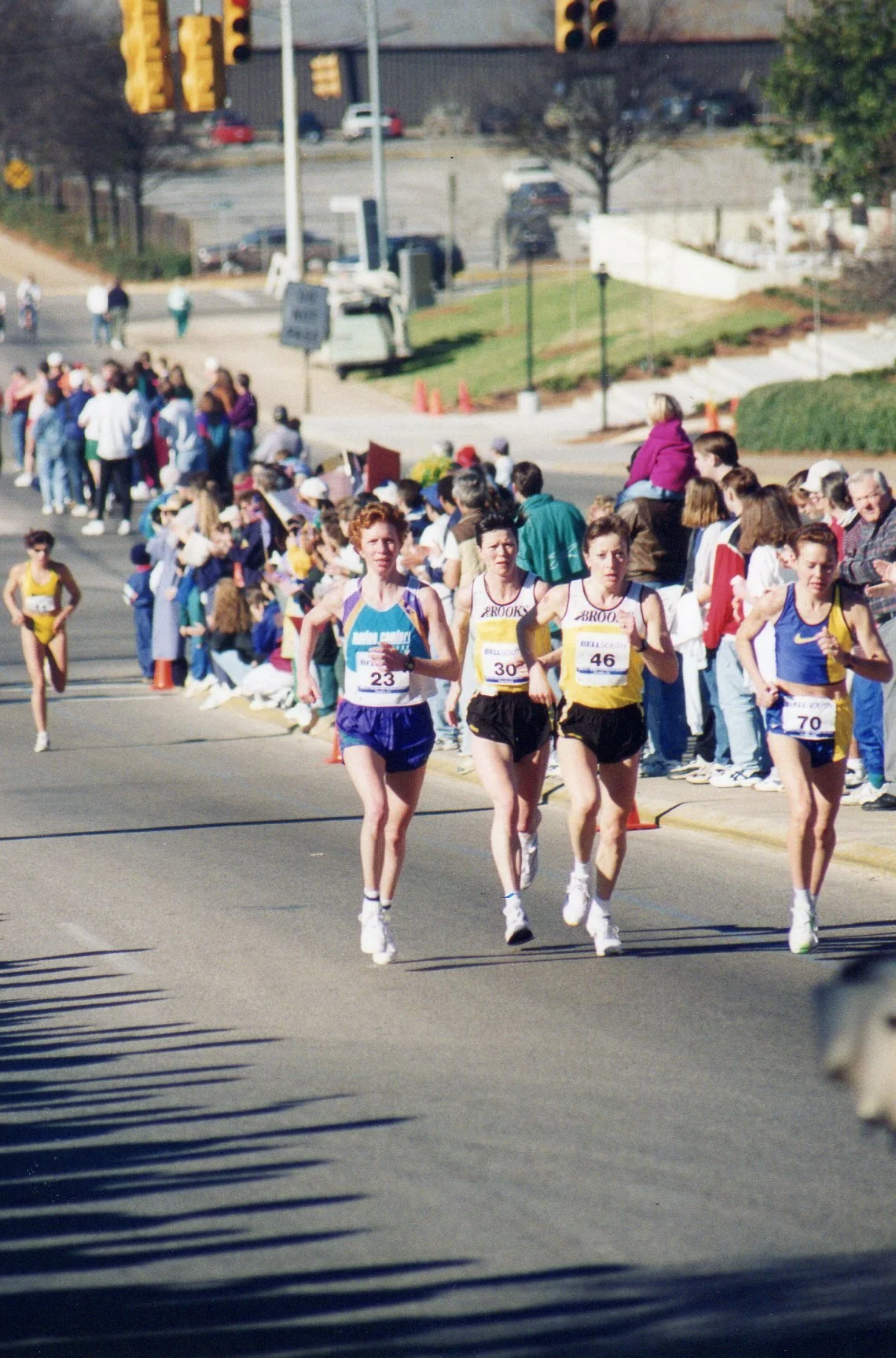
1996 Olympic Trials
Gordon Bakoulis has built an impressive running résumé that includes: a five-time qualifier for the U.S. Olympic Marathon Trials, finalist in the 1992 U.S. Olympic 10,000-meter Trials, and an age-group champion at the 2001 New York City Marathon, where she ran 2:41 at age 40. Her marathon personal best stands at 2:33:01; her half-marathon best at 1:11:34.
“I can’t imagine running not being in my life,” she says. Fortunately, she has never had to. Running has shaped her life for more than five decades.
Born on Valentine’s Day in 1961 in Princeton, New Jersey, Bakoulis was the oldest of three daughters. Both of her parents were accomplished athletes who instilled in their children a love of sport, the outdoors, and healthy living. Much of her childhood was spent outside playing neighborhood games—Tag, Kick the Can, and anything that required running and teamwork. When she wasn’t running around outdoors, she was curled up with a book. “I read all the Nancy Drew books, Narnia, and the Misty of Chincoteague series. I was sort of a geek,” she laughs.
Her father was a member of New York Road Runners, and she occasionally joined him for runs. It wasn’t until her senior year of high school that she joined the track team—where she promptly began winning nearly every race she entered.
At the University of Virginia, she chose not to run track, preferring to immerse herself fully in the college experience. Yet her talent kept surfacing. As a freshman, she entered a 10-mile race with no formal training—and won. As a senior, she ran a half-marathon, again without training, finishing in 1:34 (7:10 pace). She was beginning to realize that she had a natural talent for running.
After graduation, Bakoulis moved to New York City and began a career in publishing, first at Ms. magazine working with Gloria Steinem, then at Glamour. “I went from being a feminist to writing ‘do’s and don’ts about dress and makeup,’” she jokes.
In 1983, she volunteered at the New York City Marathon alongside her father. Watching what she called “the parade of humanity” sparked something. “I can do this!” she exclaimed. She entered the lottery for the 1984 race—when the entry fee was just $10—and got in.
She trained diligently, but race day brought 79-degree heat. Running smart and staying hydrated, she finished her debut marathon in 3:40.
“I was hooked.”
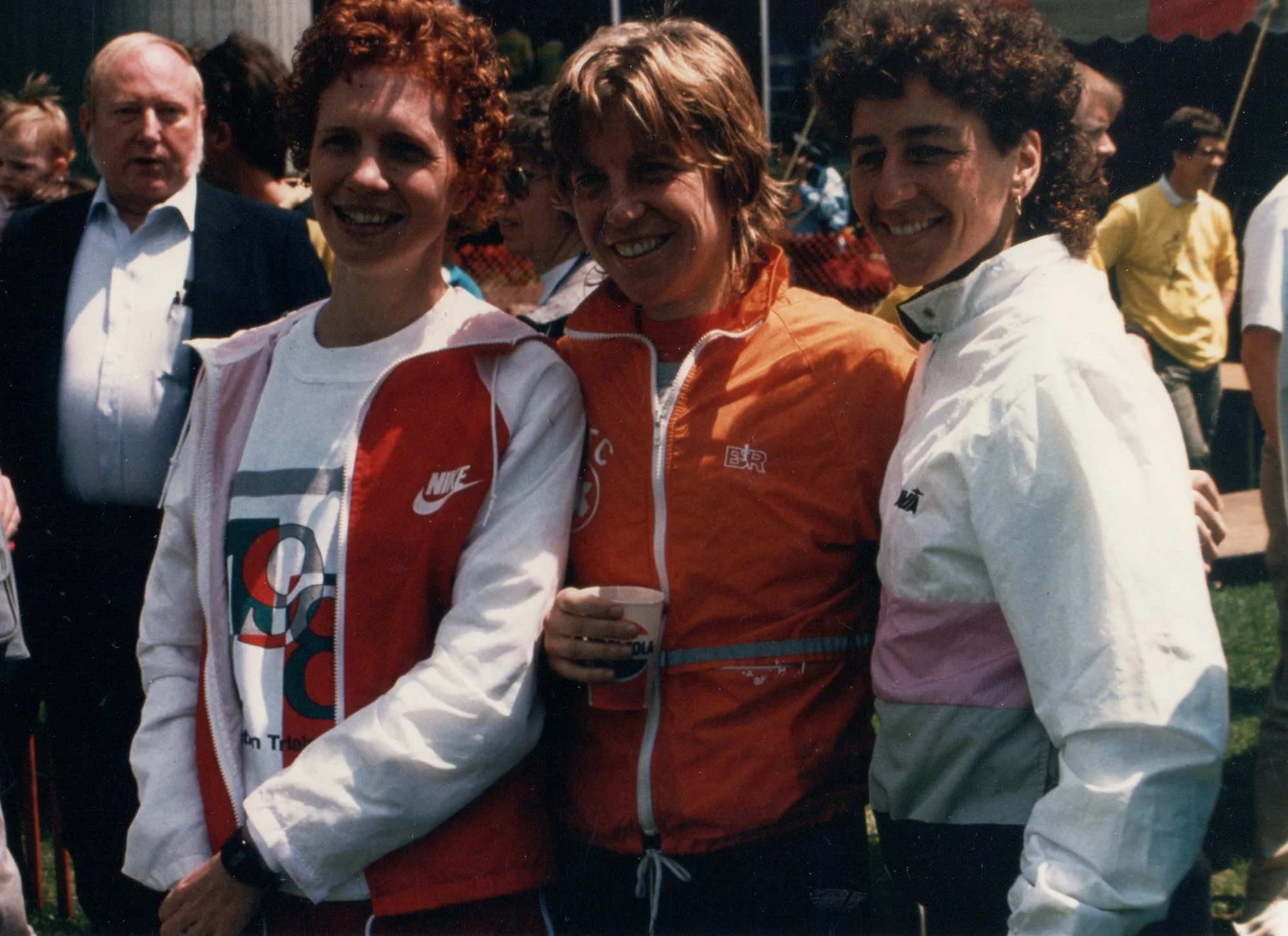
1988 Olympic Trials
Soon she was recruited to join an elite racing team, and the victories began to stack up. She represented the United States at the 1989 World Cup Marathon, the 1991 World Championships Marathon, the 1992 World Championships Half Marathon, and the 1992 Beijing International Ekiden, a multi-stage relay race. In 2010, New York Road Runners named her the 2000–2009 Runner of the Decade.
Despite her accomplishments, Bakoulis resists the label of pioneer. She reserves that distinction for trailblazers like Kathrine Switzer, Nina Kuscsik, and Toshika d’Elia. “They opened the doors for others like me, and I am so grateful to them,” she says. Still, she has raced alongside these legends—and counts them as friends.
At the height of her training for the Olympic Trials, she ran 90 miles per week, often doubling—before and after work. Living in New York City made it manageable. She ran to work, ran home, and everywhere in between, usually with a backpack full of editing work. She also talks about the pain and discomfort it takes to be at the top. “There is pain when running at your top speed, but you learn how to manage it,” she explains. “It’s part of the package.”
For more than two decades, she has combined her passion for running and writing in her editorial role at New York Road Runners. In recent years, she has added coaching—instructing first-time marathoners and new runners. “I absolutely love passing on my love of running and all the knowledge I’ve accumulated over the years,” she says. “They become my children in a way.” No question is too small—even “Do I have to stay in my corral for the entire race?”
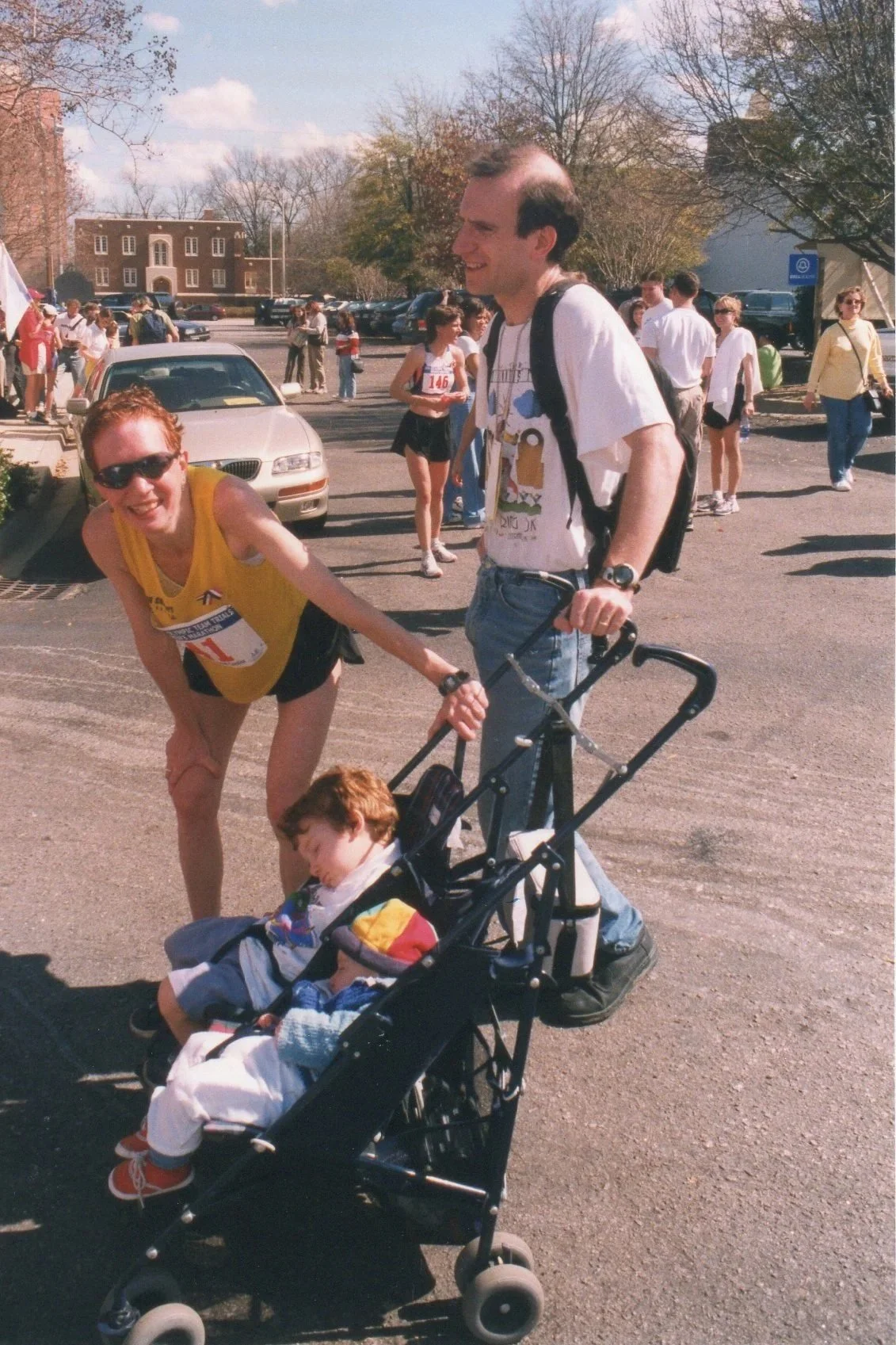
With the family at the 2000 Olympic trials
Though she may not claim to be a pioneer, Bakoulis has quietly shaped the sport for younger generations. Through her writing and coaching, she encourages women to understand running’s history and to speak openly about topics often left unaddressed: eating disorders, gender discrimination, equality, identity, and self-acceptance. Her advice to emerging elite runners is simple: balance. “There has to be a healthy balance between running and the other roles in your life—partner, parent, career—or your performance will suffer.”
Now 65, Bakoulis embraces slowing down and the privilege of healthy aging. “I appreciate every day that I’m able to go for a run,” she says. Yet her competitive fire remains. At the 2025 Fifth Avenue Mile, she ran 6:40 pace at age 64, placing ninth—edged out by competitors a few years younger. “It’s tough to be at the end of your age division,” she admits with a smile.
In reflecting on her life in the sport, she says, “I get as much as I give from the sport that I love so much. I want to preserve this gift for as long as I can.” She remembers being that skinny kid running around the neighborhood playing games, and how afterwards she felt strong, assured, and full of energy, breathless but strong, assured, and energized.
“Running still makes me feel the exact same way.”
Note about the author: Gail Waesche Kislevitz is an award-winning journalist and the author of six books on running and sports. She was a columnist for Runner’s World for fifteen years and her freelance work has appeared in Shape, Marathon and Beyond, and New York Runner.