Bobbi Gibb
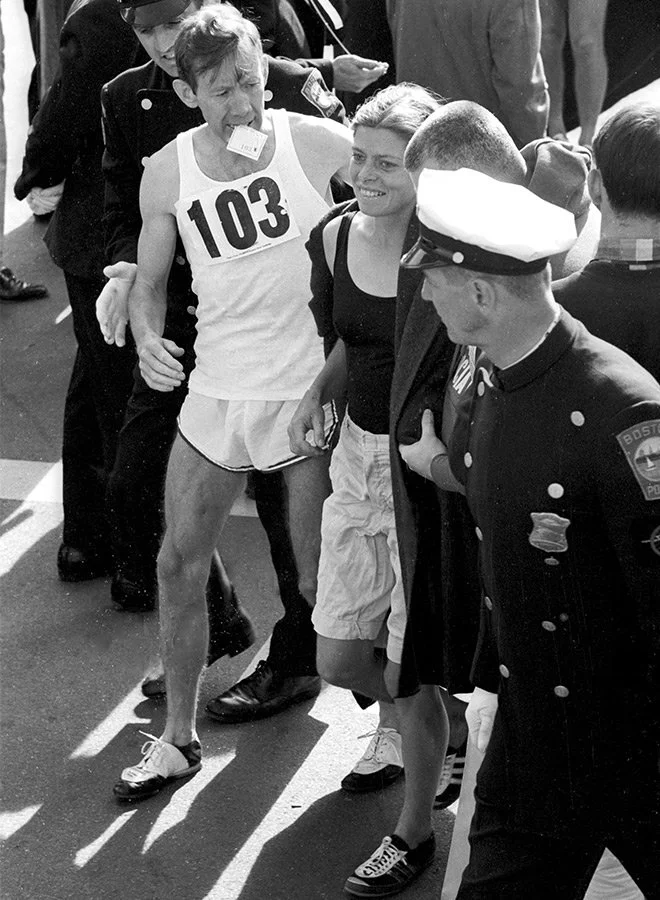
Photo credit: B.A.A. Archive
History-makers question the current state, push boundaries, and turn off the background noise of naysayers. Bobbi Gibb embodies those traits, defying the limitations imposed on women to trailblaze—literally and figuratively—to affect change.
During her formative years, Bobbi lived in an era in which women were oppressed and silenced. That was counter to her true self. Free-spirited and wildly intelligent, Bobbi shares a life story in this episode of Starting Line 1928 that is compelling, transformative, and beautifully lived. And it’s this life story, and her commitment to staying true to herself, that changed running history forever in 1966.
Bobbi didn’t want to make history—but rather, to change history.
As soon as she began walking, the call to run was natural, innate, and instinctual. Movement took her to places to embrace peace and envelop herself in nature—ultimately finding joy in life. You’ll hear her talk about sunshine pouring through her as she ran; she felt alive.
Running for women in this era was unheard of, and so were Bobbi’s other passions: science, medicine, law, and sculpture. She defied the social norms of the time, and that meant defying her parents, defying societal constructs, and most importantly staying true to herself rather than shrinking to the standards of the era. Bobbi stood tall and proud, pursuing her callings without hesitation, not settling for narrow definitions of what a life could be. And this sensibility led to a pivotal time in running history.
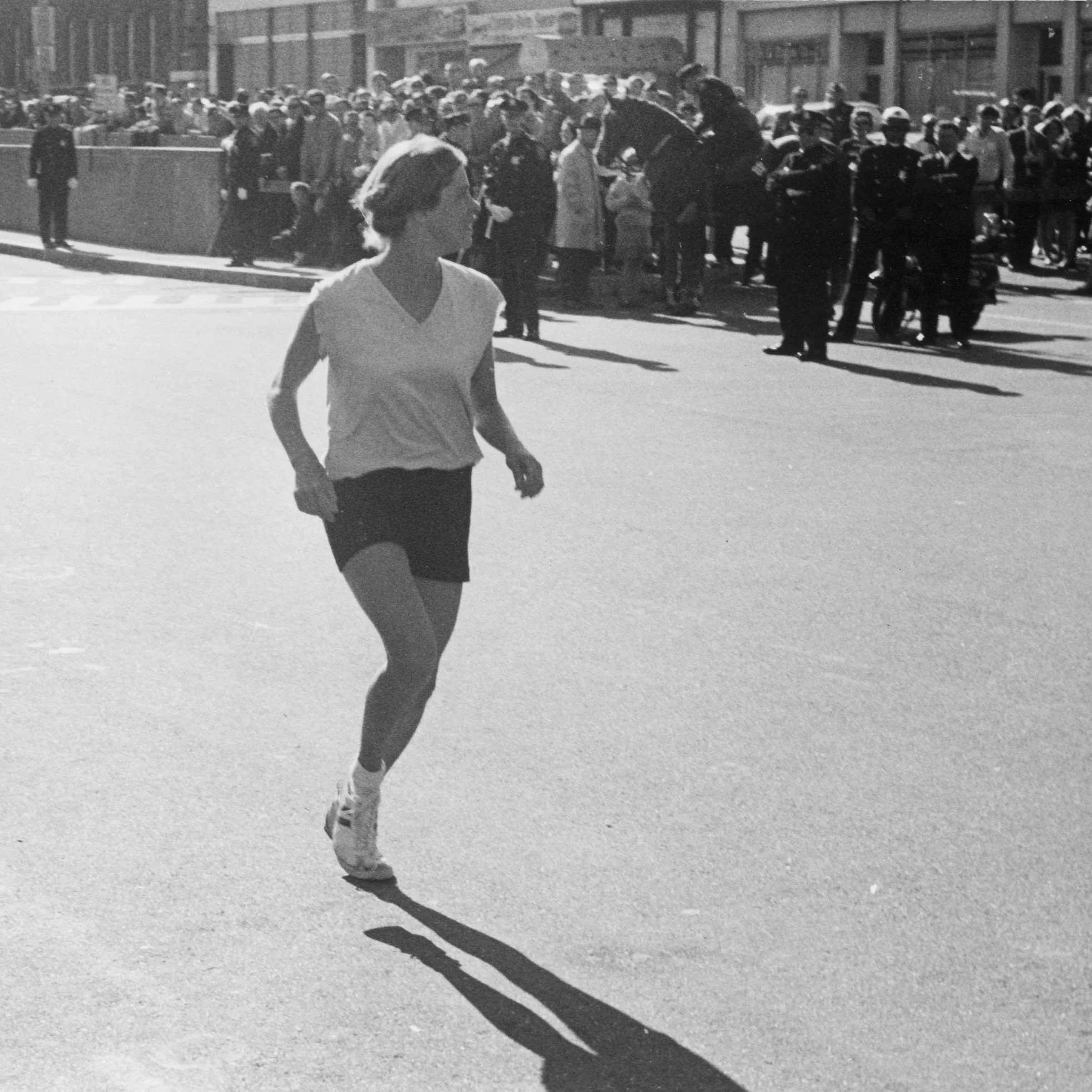
Photo credit: B.A.A. Archive
When introduced to the concept of the Boston Marathon, Bobbi was immediately charged with a drive to run 26.2 miles. Yet when she applied for a number to run in the marathon, she was denied under the false premise that women are not built to run marathons or run any race longer than a mile and a half. “If women were barred from even trying, how could they ever prove what they were capable of?” she asks. This was a high-stakes situation.
Bobbi fiercely and vividly describes that day, a day in which she hid in the bushes wearing boys' Bermuda shorts and boys' running shoes, jumping into the pack of men as the race began. Word spread almost instantly that a woman was about to make history. The media caught wind. Her boys' size 6 running shoes could have destroyed her dreams due to excruciating blisters that invaded her feet, causing her to tiptoe barefoot for a portion of the race. Sheer determination kept her in the race, dedicating her run to all the women who didn’t know what was possible. The only thing she let go was the notion of achieving a sub-three-hour marathon, knowing what was at stake if she dropped out.
Bobbi completed the marathon ahead of two-thirds of the men, and through doing so she physically exclaimed that women are strong, they’re fierce, and this was just the beginning of a new era.
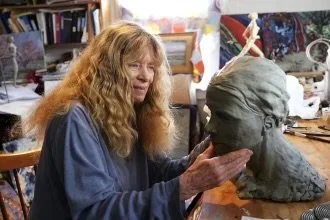
This is a story that runs deep, with themes of honesty, integrity, science, art, love of country, family dynamics, and living a life with conviction. Yes, the history made on that day in 1966 is central to Bobbi’s story, but Bobbi is bigger than that moment. When you hear Bobbi speak, you’ll be moved by her life’s philosophies, humor, and powerful wisdom.
This time with Bobbi humanizes a history that is often not discussed but will inspire us all. Bobbi was the Starting Line for women, and her messages will resonate for all today.
A note about the author: Marcy I. Marshall grew up during the running boom, surrounded by parents whose lives were deeply rooted in the sport. Inspired by her family’s passion, she began running in elementary school and has carried that connection with her ever since. Runner’s Gazette was also central to her life; she spent many summers working for the publication alongside her mother, Freddi Carlip, its owner and editor. Today, Marcy is a communications leader in the healthcare industry.