Dusty Rhodes
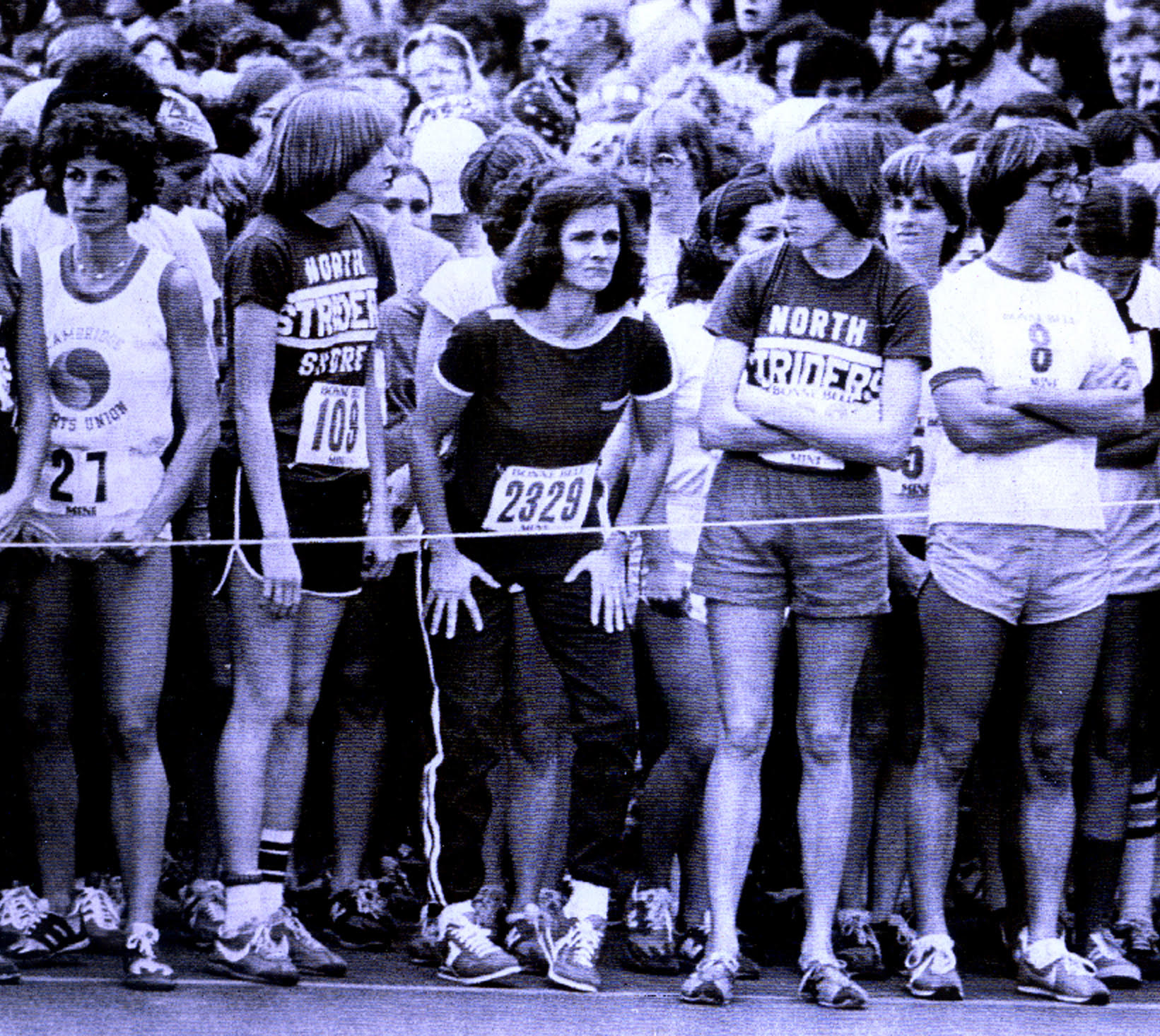
Photo from Boston 10K for Women Archives
The Boston 10K for Women celebrates its 50th anniversary this year, making it one of the oldest women’s road races in the country. But in 1977, when founder Dusty Rhodes dreamed up the event, no one could have predicted that it would endure for generations—not even Dusty.
Back then, women were still fighting for the opportunity to participate in road races. Dusty recalls that people thought she was “nuts” to plan a 10-kilometer race for women. But she pushed past the critics, and thanks to her perseverance, the Boston 10K for Women has become an iconic event with immense local and national influence.
Dusty grew up in Eastern Pennsylvania and made the spur-of-the-moment decision to move to Boston after graduating from Pennsylvania State University, where she was a student-athlete. She arrived in Boston with everything she owned stuffed into her Volkswagen, and she began knocking on doors to find a job. The Boston Patriots (now the New England Patriots) hired her to sell tickets, and Dusty quickly worked her way up the organization, eventually becoming the highest-ranking woman in professional football.
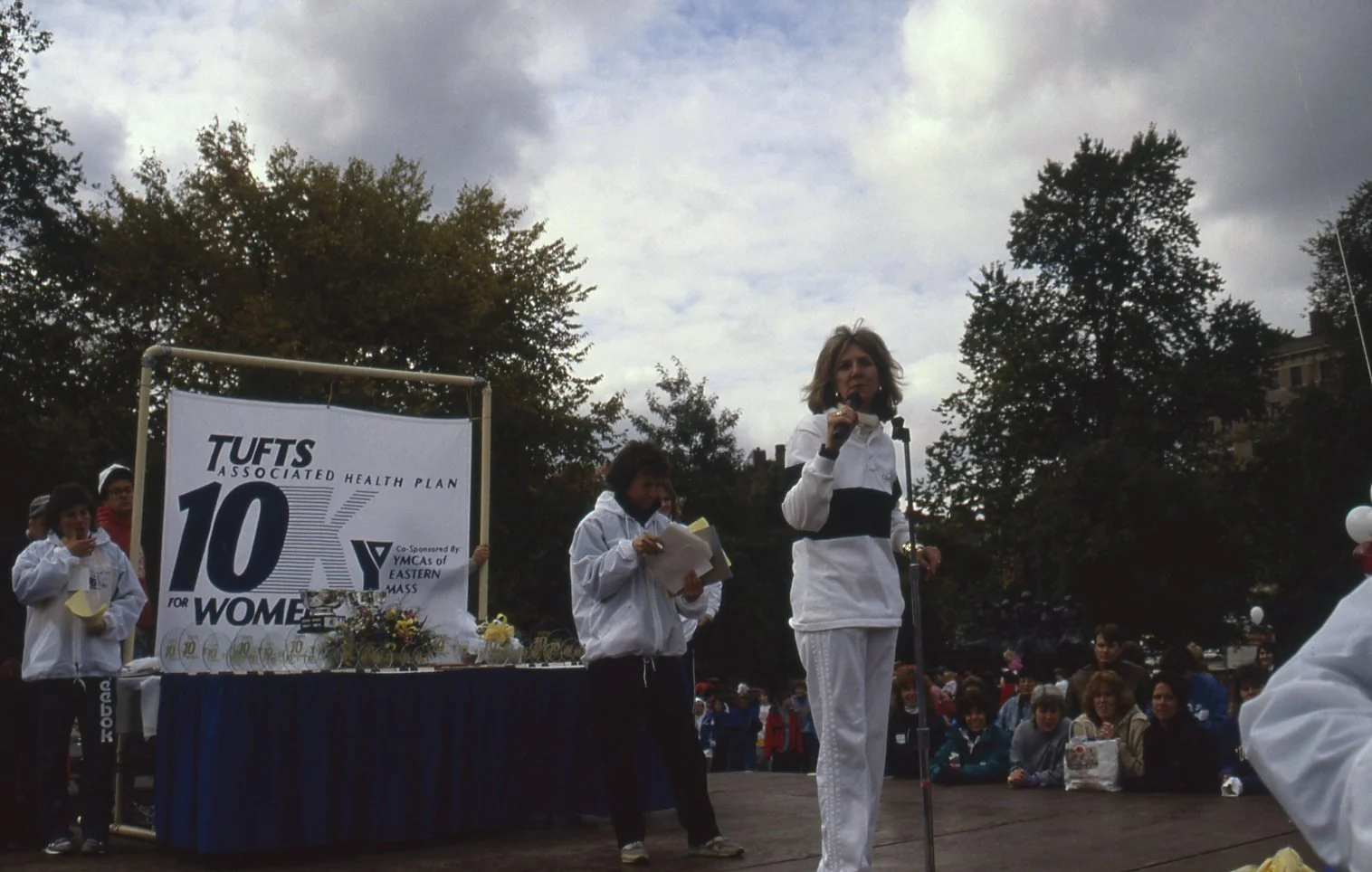
Photo from Boston 10K for Women Archives
Despite her success with the Patriots, Dusty decided to build something of her own. She founded the events marketing company Conventures, and soon after, she heard that the cosmetics brand Bonne Bell was planning an all-women’s 10-kilometer race in New York. She approached the president of the company to pitch him an idea.
“I said, ‘Why not Boston?’ And he said, ‘Sure! Go do it,’” Dusty says.
Sitting on a park bench in New York, Dusty signed an agreement to put on the first-ever Boston 10K for Women, which was then called the Bonne Bell Mini Marathon. She didn’t know anything about planning a road race, but she figured that her connections in Boston's sports world could help her figure it out. When she called Will Cloney of the Boston Athletic Association (BAA), though, he didn’t offer much help.
“Will Cloney said, ‘We go out to Hopkinton, we shoot a gun, and we just let ‘em go,’” recalls Dusty. “And I was like, okay, now I’ve got to figure this one out from scratch.”
Dusty immediately got to work. She and her husband started driving around the city with leaflets advertising the race, handing them out to female runners. She planned the route, secured the road closures, and coordinated police and medical support.
When race day arrived, Dusty hoped the Bonne Bell Mini Marathon would attract 200 women. To her astonishment, over 2,000 showed up.
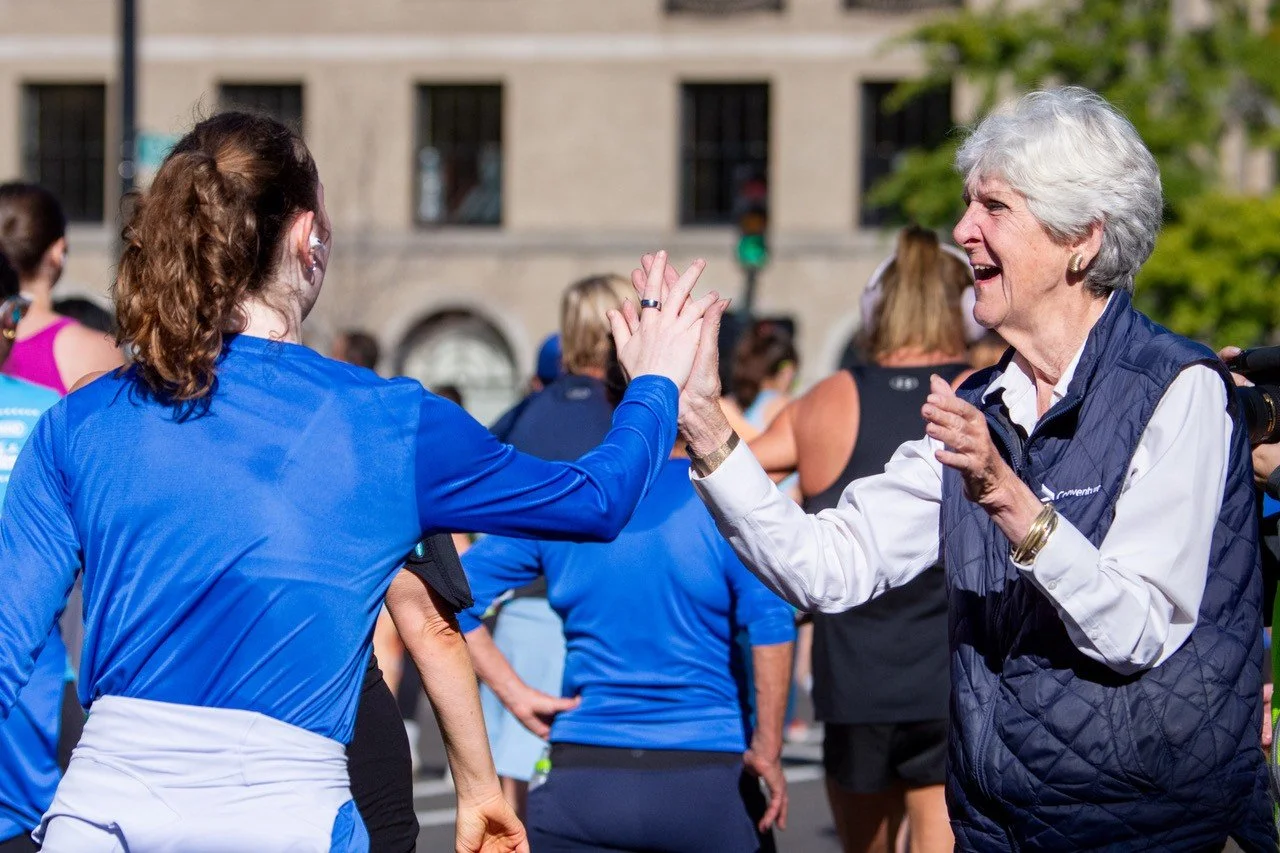
Photo from Boston 10K for Women Archives
Over the years, Dusty and her team—to whom she is always quick to give credit—have created a one-of-a-kind race where elite and recreational runners stride side by side. Around 6,000 women participate in the race each year, including an elite field boasting some of the world’s most accomplished runners, such as Joan Benoit Samuelson, Molly Huddle, Sharon Lokedi, and Sara Hall, to name a few. Several American records have been set on the course, which served for many years as the USATF 10 Kilometer Championships.
In her fascinating interview with Starting Line 1928, Dusty gives listeners a behind-the-scenes look at what it took to create such a historic event. She discusses keeping her confidence in the face of adversity, creating space for elite and recreational athletes alike to shine, and adapting the race to changing times.
The Boston 10K for Women is just one road race, in one city, but its history tells a bigger story. It reminds us of the women who worked for decades to create spaces where anyone who wanted to participate in the sport of running could do so freely. Dusty Rhodes is one such trailblazer, and her story will certainly inspire you.
Sydney Sauer is a freelance journalist and a PhD student at Harvard University. She is the producer of the podcast Finish Stronger, an audio documentary about the Boston 10k for Women and the fight for women’s running.