Eileen Waters Connolly
In this episode, you will hear an interview with Eileen Waters Connolly done by Amy Begley as part of the Road Runners Club of America oral history project. It was recorded by phone in 2013. Eileen Waters Connolly passed away in 2016.
Eileen Waters Connolly was a trailblazer in American long-distance running, part of the first generation of women to compete in the sport. In 1972, she made history by setting a world record in a 50-mile race on a track in Santa Monica, finishing in 7:05:31. Even more impressive, she ran negative splits—completing the second half 23 minutes faster than the first. A year later, she returned and broke her own record, cutting 10 minutes off her time.
Remarkably, Eileen had only taken up running three years earlier—initially as a way to lose weight and get in shape. Her rise was nothing short of extraordinary.
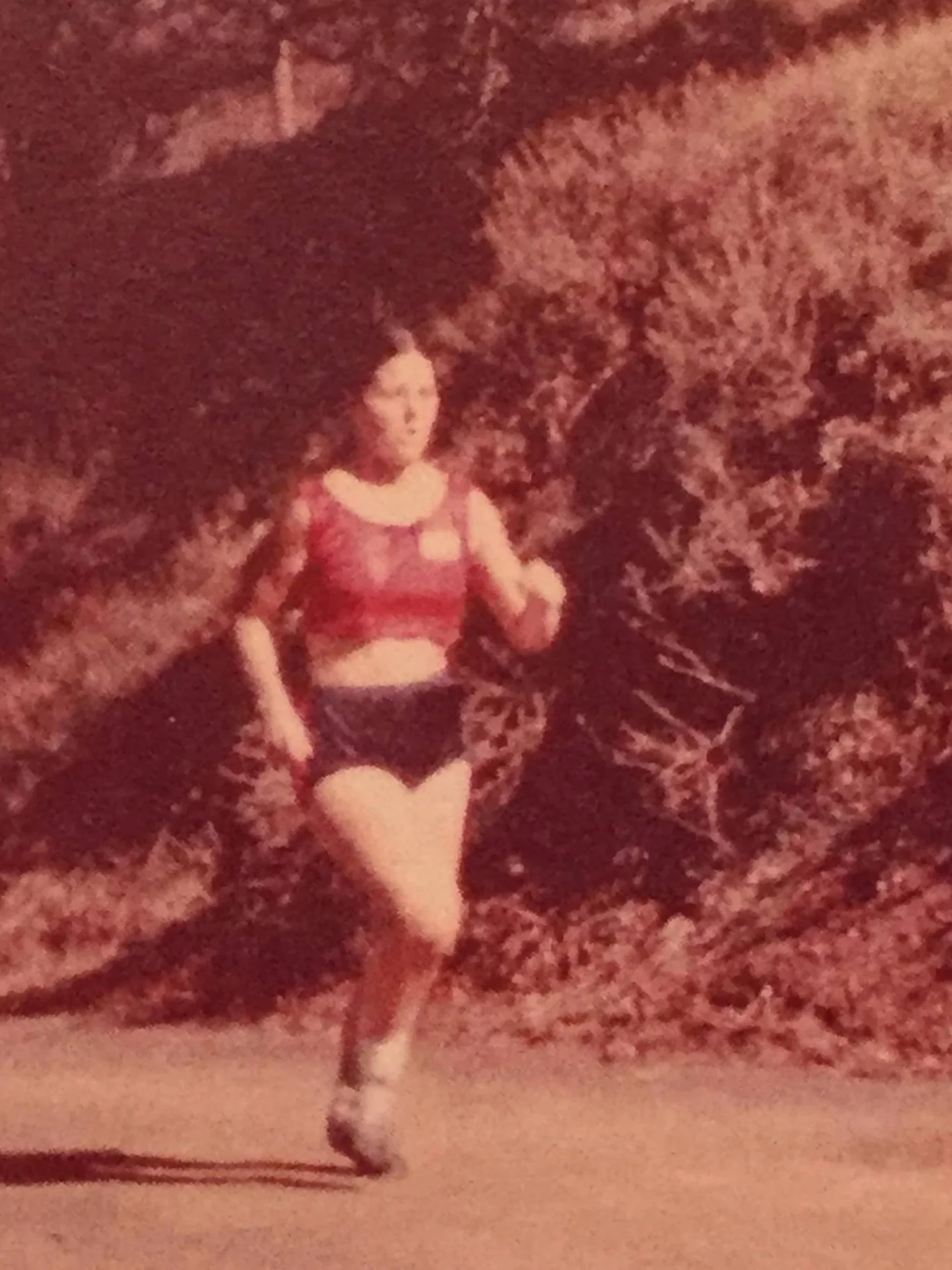
Waters Connolly started running in 1969 at the age of 24. Overweight most of her life, she was determined to get in shape. She went to a track in her hometown of San Diego and as she stated, “I didn’t even know what to do.” Lucky for her, she met Donna and Bill Gookin, founders of the San Diego Track Club, and they took her under their wing. Donna and Eileen became not only race buddies but best friends. When some people laughed at her when she ran for being overweight, Donna would tell her not to worry, that she would beat them all someday.
During the early days of the club, USA Track and Field prohibited women from distance running or running in races with men. But Donna invited other female runners to join the club, and they were welcomed with open arms by the men. But the females kept butting heads with USA Track and Field who believed that women could damage their reproductive parts if they ran more than two laps around a track. Determined to prove them wrong, Donna and Eileen pushed the boundaries and trained longer and harder. In 1971, Donna wrote to the AAU (Amateur Athletic Union) and pleaded her case to let them run in the 1971 Mission Bay Marathon of San Diego. Finally, they got the approval that had eluded them. They had to sew their own racing clothes.
Waters Connolly finished almost last, in 4:01. She laughed, saying, “I can run slower than anyone!” After that marathon she exclaimed, “One and Done” but went on to run a total of 50 with a PR of 3:01.
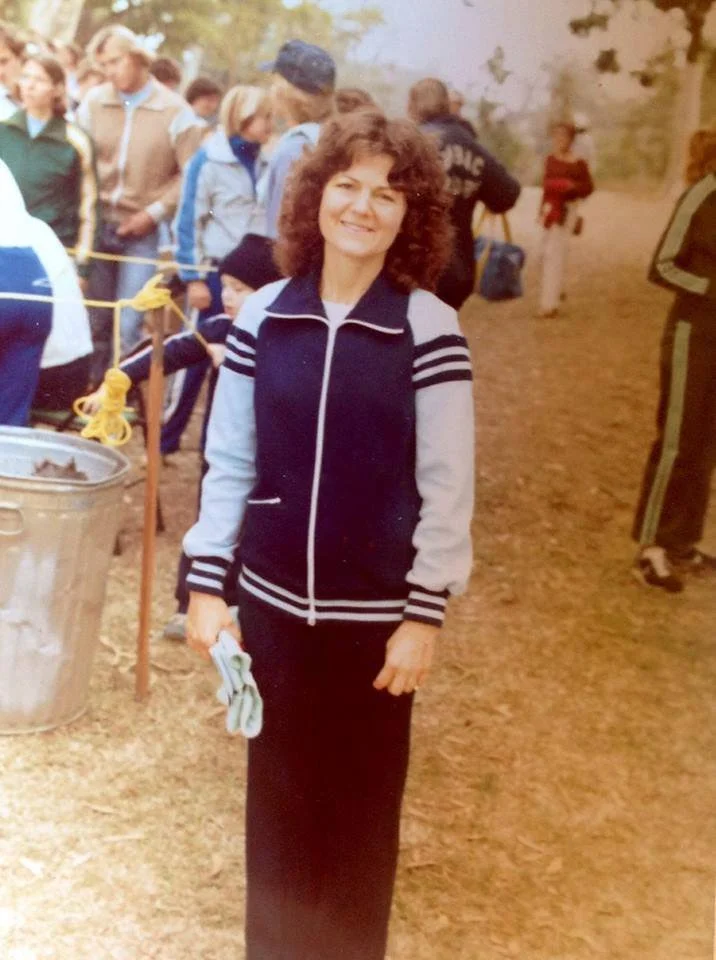
Her training was extensive. She did two workouts a day, the first one starting at 4 4 am with a three-mile run. Then she headed to her job as a hospital medical secretary. After work she went to the track adding 6-8 more miles. On the weekends she would do her long runs. Her longest weekly mileage was 100. When she had two daughters, she continued her training by pushing them in umbrella strollers (long before baby joggers were invented) and when they graduated to tricycles, she pulled them on their trikes with a rope tied to her waist.
During the ’70s when she and Donna were running marathons, there was no water offered on the course. During one very hot marathon, they found a horse trough on the side of the course and dunked their heads in it for relief. When she ran her world-record-setting 50-miler on the track, she carried a transistor radio, listening to Casey Kasem’s America’s Top 40 to break the boredom.
Waters Connolly loved the running community from the moment she was adopted by the Gookins. Together, Eileen and Donna proved that women were built for endurance, some would say better than their male counterparts. When Eileen broke the 50-mile track record in 1972, Donna was the one encouraging and pushing her on to break her (Donna) own record of 7:12:51.
When David and Donna Gookin created the first triathlon in San Diego in 1974, ever-the-adventurist Waters Connolley entered and won.
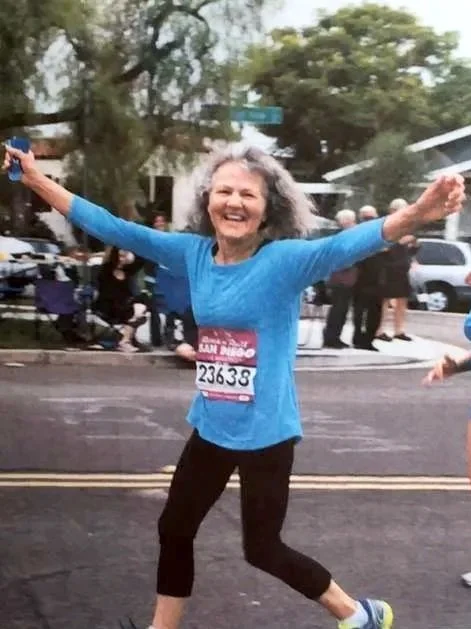
As Waters Connolly got older, she continued running and winning in the newly established age divisions, created by David Pain, a member of the San Diego Track Club. She and Pain ran the Pikes Peak Marathon together and spoke about the importance of age-group divisions so that runners over 40 could compete against their peers.
Her niece remembers her fondly: “She was modest and recycled most of her medals and trophies that could fill a bedroom. She was quoted in Kenneth Cooper’s book, Aerobics, discussing how running helped her with her depression. Running made her happy. She would run with me occasionally and tell me that the body is resilient, it is the brain you have to train and that time on your feet is important.”
After she retired from competition, she did volunteer work in her community, driving the elderly to doctor’s appointments. She died in 2016 at 71 from adenoid cystic carcinoma (ACC), a rare form of cancer. As she aged, she never lost her sense of humor or self-effacing nature. She was quoted as saying, “When you get old, you just show up and most likely you'll win your age group.”
Note about the author: Gail Waesche Kislevitz is an award-winning journalist and the author of six books on running and sports. She was a columnist for Runner’s World for fifteen years and her freelance work has appeared in Shape, Marathon and Beyond, and New York Runner.