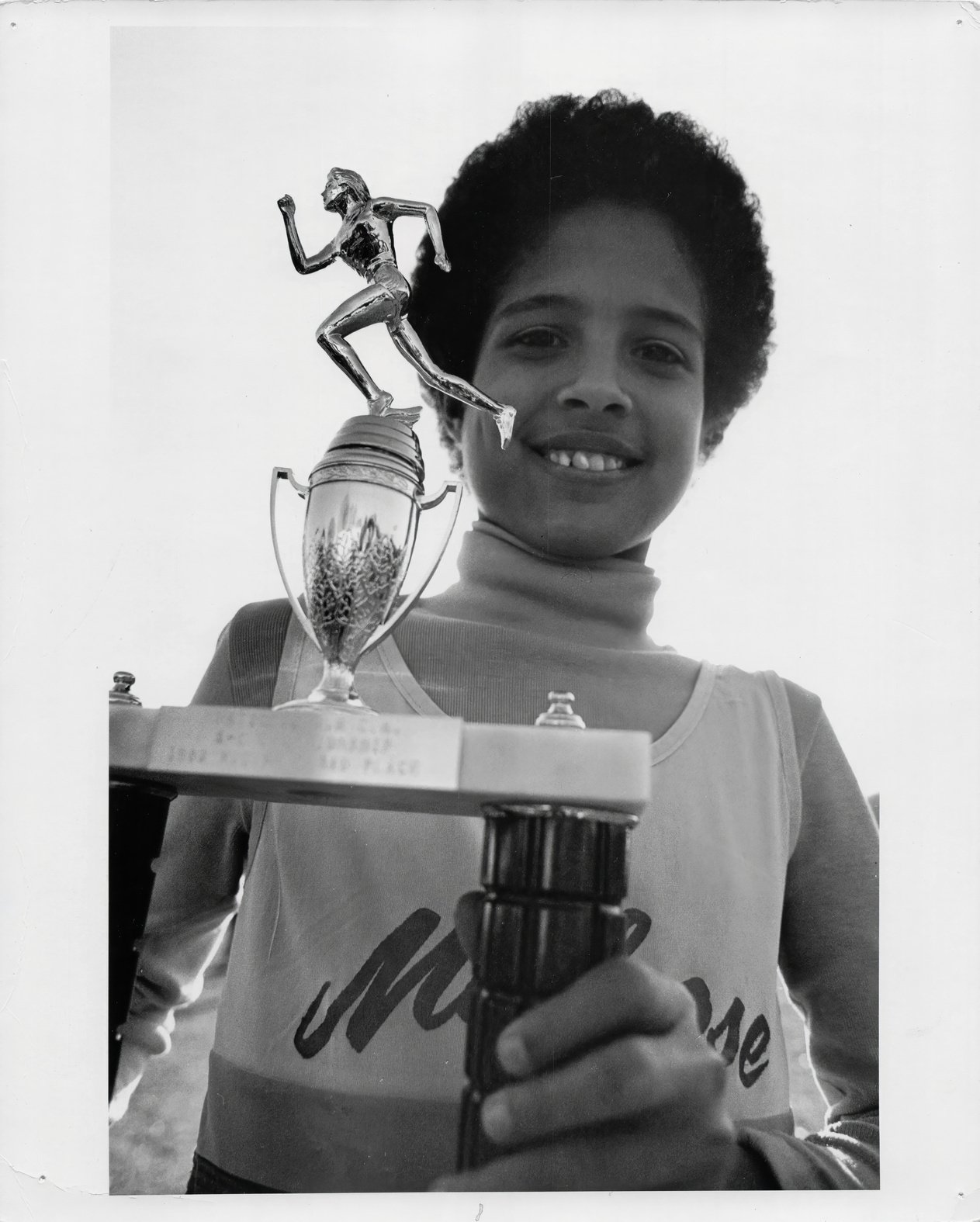
Nnenna Lynch grew up in Manhattan as a latchkey kid who realized she was fast after thriving in games of manhunt and playground races against the boys. When her older sister, Shola, joined a youth track team, Lynch’s mom directed her to attend Shola’s practices as something to do after school.
After observing enough practices, Lynch announced her intent to join the track team, but her parents firmly said no. They wanted her to establish her own identity separate from Shola, whom Lynch described as “a schoolyard legend.” Plus, Shola wasn’t keen on the prospect of her kid sister following in her footsteps.
“My parents were divorced, they did not get along at all—but on this, they agreed,” Lynch remembered.
After trying a few other sports, Lynch defiantly joined Shola on the track team, and the two became renowned as a dynamic duo of speedy sisters. They trained with the Millrose Athletic Association’s youth program under coach Barry Geisler, who also served as president of New York Road Runners (NYRR) from 1971-72 and implemented youth programs and kids’ age-group categories into NYRR events.
When Lynch was just twelve years old, Geisler, whom Lynch described as a surrogate father, coached her to her first national title at the 1983 AAU Junior Olympic Cross Country Championships.
Lynch attended Hunter College High School, which did not have a girls’ track team at the time. She and Shola wanted to compete at the national level, so the school allowed Geisler to continue coaching them under the banner of Hunter High.
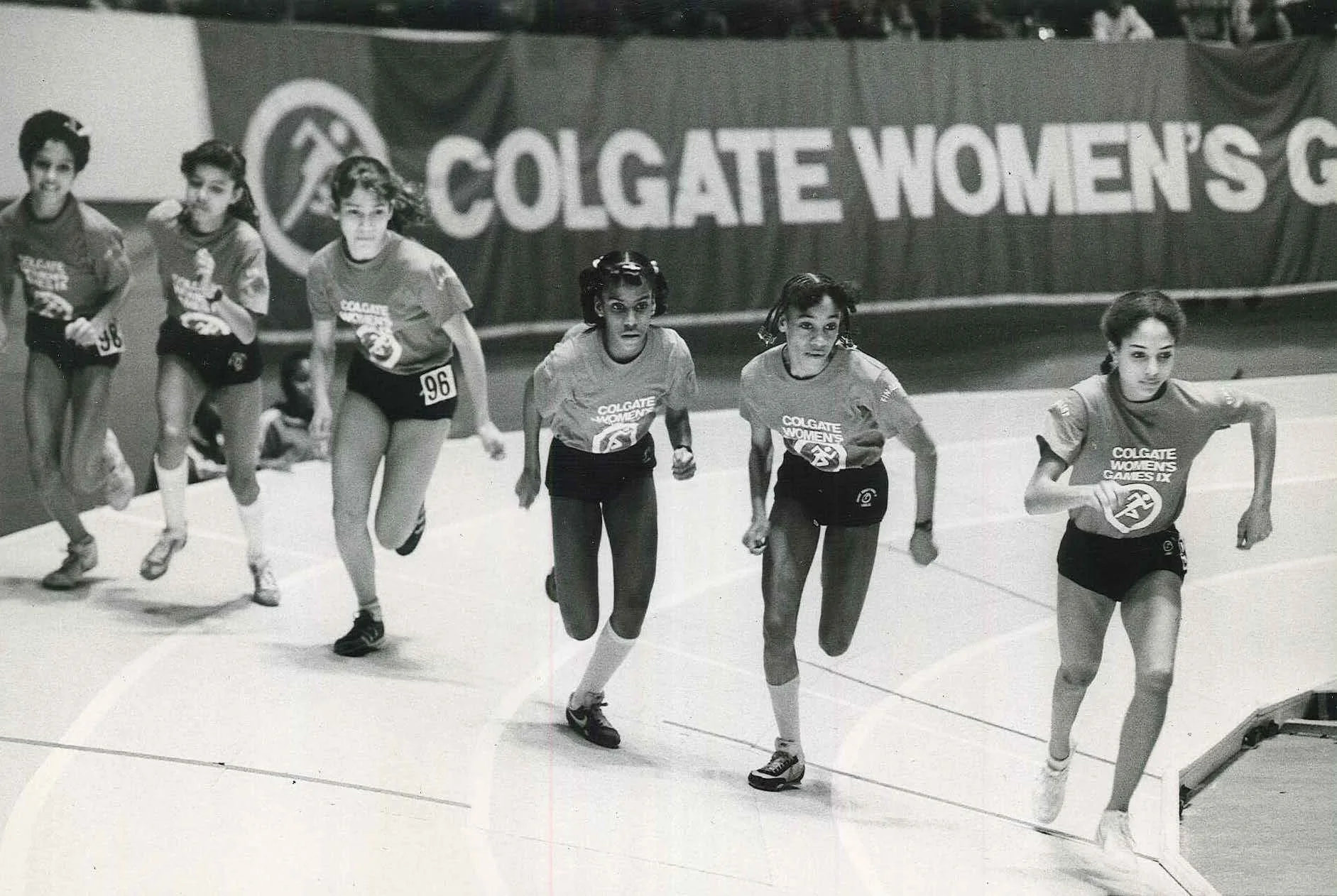
Lynch ran the 800 meters, 1500 meters, and 3,000 meters on the track, but avowed that “cross country definitely grew to be my favorite over time.” She especially loved running in Van Cortlandt Park.
After being heavily recruited to run in college, Lynch committed to women’s middle-distance powerhouse Villanova University. Shortly thereafter, she started having major second thoughts. She even called the team’s legendary coach, Marty Stern, to rescind her decision, but her made her honor her commitment.
“So I went to Villanova with a chip on my shoulder,” Lynch recalled. She figured that she’d stay for a year and then transfer. But then, the team won that year’s NCAA Cross Country Championship (the first of an unprecedented four consecutive titles), Lynch was doing great academically, and she had a boyfriend. So, she stayed, and went on to win an individual 3,000-meter NCAA title in her junior year and accumulate seven All-American honors, a Rhodes Scholarship, and the 1993 NCAA Woman of the Year Award.
As a junior at Villanova, Lynch also competed in the 1500 meters and 3,000 meters at the 1992 US Olympic Trials, but her hopes of defending her 3,000-meter NCAA title as a senior were derailed by severe shin splints that caused a stress fracture in her back.
After missing much of her senior outdoor track season, Lynch matriculated at Oxford University and started working toward a master’s in social anthropology. Having taken adequate time away from running to rest and get healthy, she began running again—and turned pro.
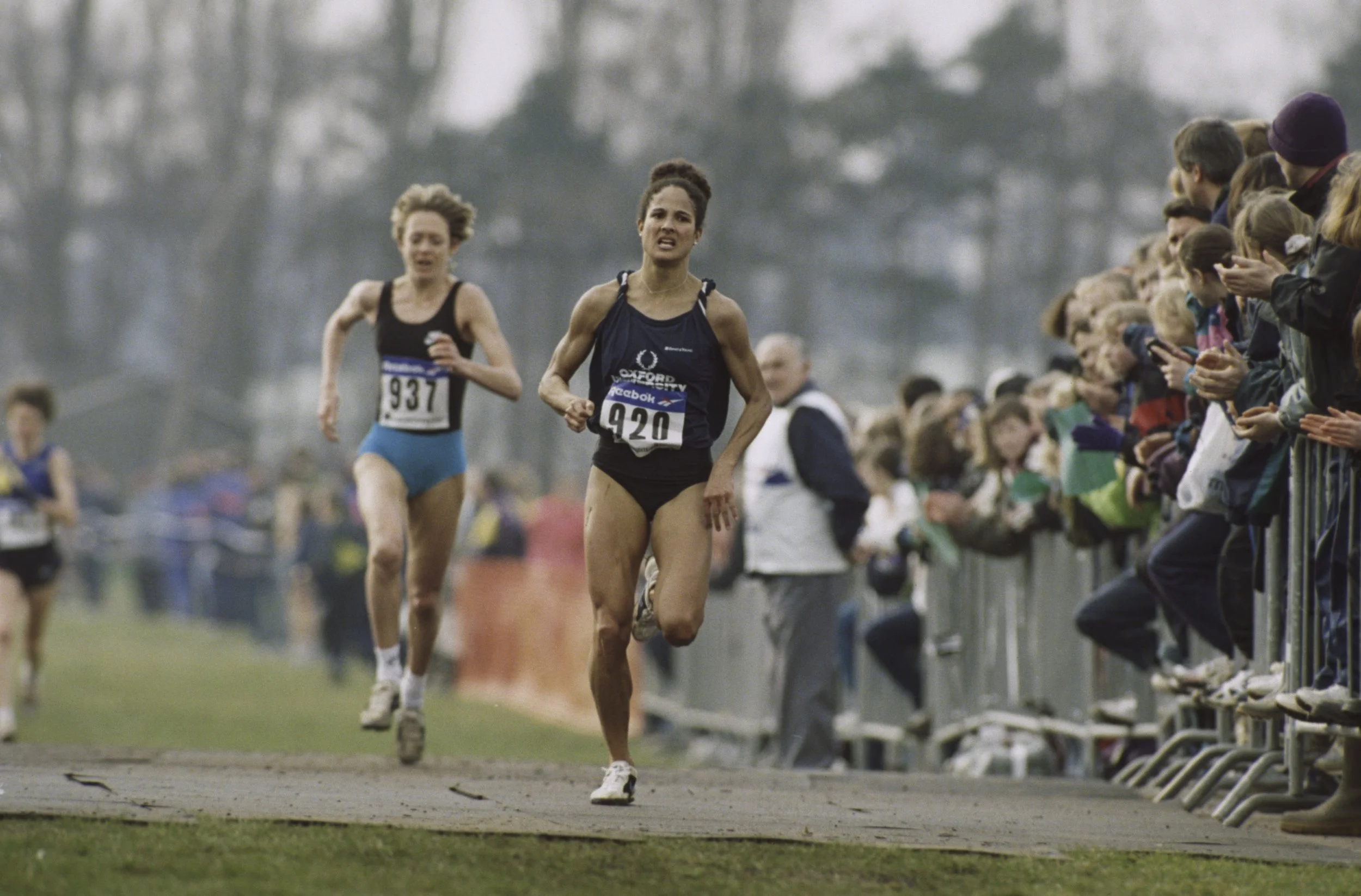
England Cross Country Championships 1996
“My path to becoming professional was really just getting back to running,” Lynch observed. “Because I could accept money, I did, and I was able to get a sponsor because of some of the relationships I developed. It unfolded naturally, as opposed to being this big decision.”
She ran professionally for six years—both during and after her time at Oxford—and won England’s cross country championship in 1996, the 5,000 meters at the World University Games in 1997, and two USA Cross Country Championships. Lynch’s sponsor, FILA, was new to the running space, and she was the face of its 1997 ad campaign.
Toward the end of Lynch’s professional career, she trained alongside Deena Kastor and Meb Keflezighi at the Olympic Training Center in Chula Vista, CA; however, by the late 1990s, breathing issues greatly diminished her ability to perform, such that she wasn’t coming anywhere close to her previous times. She was diagnosed with exercise-induced asthma, and retired from competition in 2000. Years later, she found out that she was misdiagnosed, and actually has a rare condition called vocal cord dysfunction.
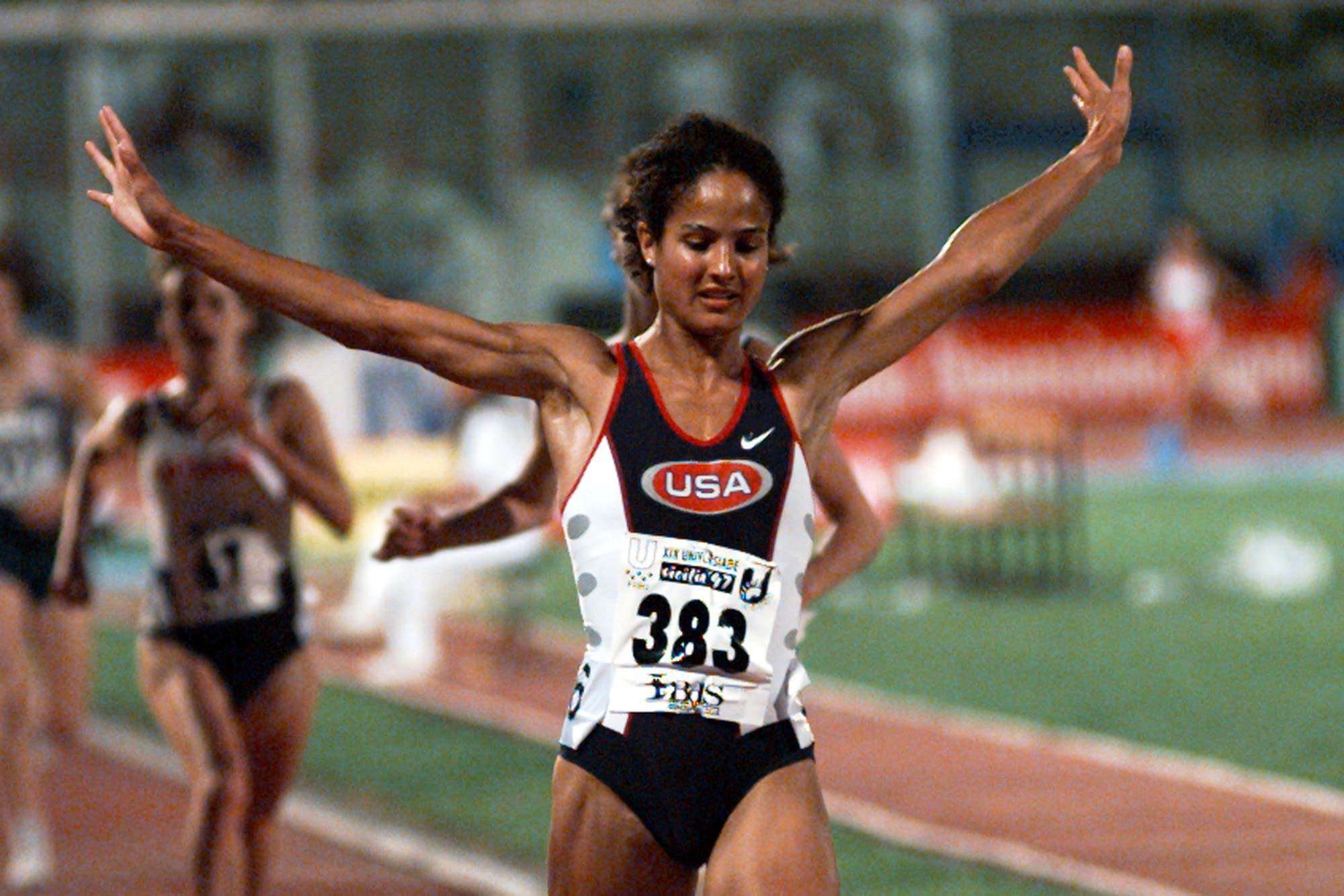
World University Games 1997
After hanging up her spikes, Lynch moved back to New York, got a job in finance, and channeled her propensity for running toward a 2:55:15 finish at the 2002 New York City Marathon—good for 31st place and a spot on The List of American-born Black women who have run a sub-three-hour marathon. Although Lynch is a middle-distance runner at heart, she has run several other marathons, including both Tokyo and Boston in 2025.
In 2014, Lynch joined the NYRR board of directors, and in 2023 she was unanimously voted its chair. Having grown up in New York and spent her formative years under the tutelage of Barry Geisler, NYRR has been critically influential throughout her lifetime of running.
Having experienced the sport through a variety of levels and perspectives, Lynch is exceptionally committed to the team aspect of all things running. “That’s something I think a lot of people lose sight of, [because] running is [often perceived as] that classic individualistic sport with the lone runner. But the truth is, I think to really be at your best, you need to be a part of a team. And not just people to run with, but if you think of the larger constellation of coaches, and physios, and supporters.”
About the author: Sarah Franklin is the project director of the Theodore Corbitt Institute for Running History Research.